Deaf Dogs: Living with Dogs Who Are Deaf


Content courtesy of Dog Central, Deaf Dogs and Deaf Dogs Rock

Lynne Chapman borrowed sign language tips and began tutoring Snowy, her hard-of-hearing Staffordshire Mix rescue, to give her a proper doggie life.
 

Deaf dogs can make some of the most wonderful companions, and they are trainable—many of dog trainers and volunteers can attest to that. Look at Zippy, the deaf Boston terrier (below), who, thanks to his owner (who came up with her own form of sign language), has now received the Kennel Club’s highest award for obedience.

Here are some helpful information from PAW volunteer, Jackie Threatte and Dog Fancy and PetLife magazines regarding deaf dogs:

Avoid surprising any dog. Since deaf dogs cannot hear people or animals approach them, they can get startled more often, which can lead to a fear or aggressive response. However, understanding and training can reduce and eliminate problems. Deaf dogs won’t hear your approach, but they are very tuned in to their other senses:

  • Stomping on the floor will get their attention through vibration
  • Flashing or shining a light will catch their eye and they will look for the source
  • To wake up a sleeping dog who is deaf, simply touch your dog lightly on the shoulder in the same spot every time you wake him or her. A gentle pat or pet away from the head will not be felt as threatening, your hands will be safe, and the dog will come to recognize the touch as coming from a friend.

Training is key. And training a dog who is deaf takes time and patience.

Zippy, the deaf Boston terrier, who, thanks to his owner (who came up with her own form of sign language), has now received the Kennel Club’s highest award for obedience.


There are two major differences in training a deaf dog. They have to look at your face and hands to get their instructions. They can’t hear the tone of your voice so you have to work your face muscles.

  • To train and teach the dog, use treats and physical praise, such as petting and smiling. When using treats, it helps to conduct training sessions before a meal when the dog is hungrier, and it helps to vary the treats to help keep the dog’s interest.
  • Teach your dog hand signals based on American Sign Language (ASL). You will be amazed as your hearing dogs pick up the signs as well. Fifteen or twenty signs will allow you to communicate easily with your deaf dog. Jackie has a dictionary created for use with dogs, which works with grandchildren as well.
  • To signal “Good dog,” use the simple “thumbs up” sign every time the dog does something correctly, along with a very animated oral expression of “What a great dog…way to go!” If you say it excitedly, your body language and facial expression will let the dog know he has pleased you. The “thumbs up” can be done immediately with any free hand, no matter where the hand is located, as long as the dog can see it. This serves much the same purpose as the clicker does in clicker training—as an immediate reward, which can be followed by a treat.

Trust is everything to a deaf dog. Trust and bonding are the key to getting the dog to look toward you frequently. When your deaf dog is truly bonded with you he will always come to you if he is worried or frightened.

  • Teach the dog to focus on you as the owner. Deaf dogs are visually oriented, so use visual cues. One advantage is that deaf dogs are not distracted by noise and other sounds. Unlike hearing dogs, your deaf dog will need you to use the sign for his name and make full eye contact when you talk to him. Watching your lips move while you talk towards the sink or your newspaper will not mean a thing.
  • Make training part of every activity throughout the day. If the dog is laying quietly, watching you work, look at him occasionally and give him a smile and a thumbs-up to let him know that he is being good.

Deaf dogs can be great with children but there are rules. Children often engage in unpredictable behavior, so raising a deaf dog in a household with children and/or many visiting youngsters can be a challenge. Children must be warned that a dog who cannot hear can startle more easily and might snap at someone.

  • Young children move rapidly in random directions, frequently waving their arms, yelling, crying, or making other faces. To the deaf dog, this body language can be misinterpreted as anger or an attack.
  • Make several areas strictly off limits to the children and their playmates. For example, the dog’s crate and the dog’s bed, and the area immediately around them, should be a completely safe place for the dog to fall asleep without fear.
  • Teaching the child to “sign” to the dog will help them slow down and concentrate on the communication.

Give a deaf dog his own personal and safe space. Be sure to have an area where the deaf dog can have his very own space.

  • You can use a big crate covered up so it is like a den inside. This is a place he can go to and get his time to relax and take a nap. You have to crate train him and all of his meals are served in his crate so his crate so his crate is a positive experience.
  • If you are getting a deaf puppy or a rambunctious older deaf dog, think about putting up doggie gates in your living-family room. By having dog gates up, you can monitor your dog from “shoe surfing” and getting into things he is not supposed to get in to.
  • It helps to have a fenced yard in which to exercise. Remember, a deaf dog cannot hear hear outside dangers as such as cars or other dogs.
  • Always walk a deaf dog on a leash. A deaf dog running away from you will not come when you call him… no matter how loud you yell or how animated your “come” sign, so containment in a safe fenced area or being on a leash is the only way to go.
  • Use a flashlight to call your deaf dog after dark. Simply shine the light up and down the yard or over the lower branches of the trees where the dog will see it. He will quickly come running. Flashing a porch light works, too, as long as it is strong enough to cover the entire yard and the dog can see it from everywhere.

Hearing dogs can be your deaf dog’s “partner.” A hearing dog can be a great companion for your deaf dog. Deaf dogs often take “cues” from the hearing dogs around them. Since they rely on their eyes and their sense of touch to make up for their lack of hearing, they will look where the other dog looks, catch even the slightest movement in their environment, and frequently lay down touching their human or animal companions. When the one they are touching moves even slightly, they will wake up and quickly glance around to see what is happening.

Owning a deaf dog can bring much joy. And “don’t be afraid of the deaf ones, they can be the most loving.” adds Jackie. Yes, Deaf Dogs Rock.

More tips on training deaf dogs:
Deaf Dogs Rock


Content courtesy of Deaf Dogs and Deaf Dogs Rock

For perhaps, if the truth were known, we’re all a little blind, a little deaf, a little handicapped, a little lonely, a little less than perfect. And if we can learn to appreciate and utilize the dog’s full potentials, we will, together, make it in this life on earth.
— Charlotte Schwartz

Dogs are often abandoned when owners discover they can’t hear. Is any dog truly “perfect”? Is any human? No one is.

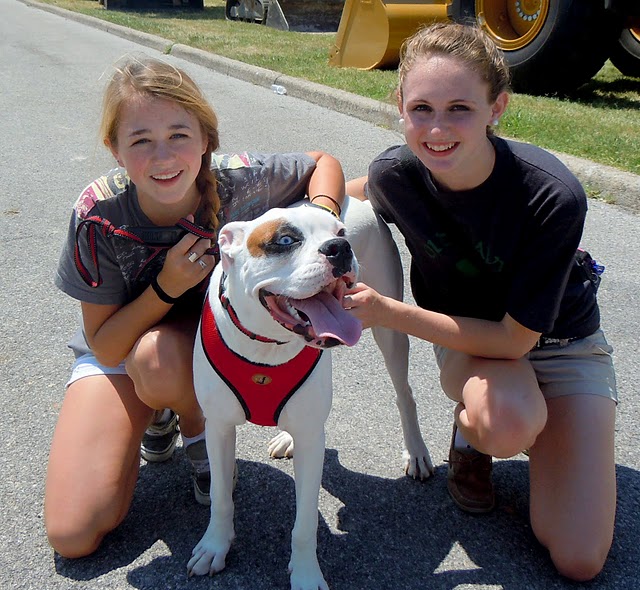
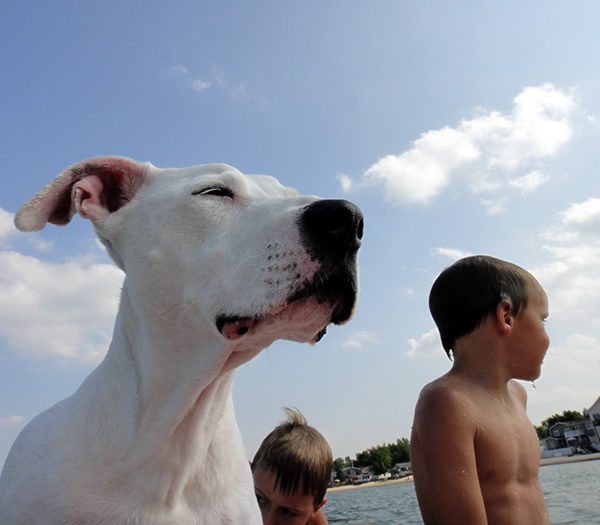
Deaf dogs can make some of the most wonderful companions, and many owners and trainers can attest to that. Read Sierra’s story (above with his human siblings) or Zippy, the Boston Terrier who received the Kennel Club’s highest award for obedience.

Owning a deaf dog can bring much joy. “Chelsea, Harpo and Olivia and others have taught me a lot about compassion, empathy, and true communication,” says Jackie Threatte of Adelphi, MD, who has rescued approximately 170 abandoned dogs, about her deaf dogs. Chelsea knew 40 ASL signs when she was adopted into a family of both hearing and deaf members in which everyone signs, and Jackie believes that Chelsea’s vocabulary has increased in her time with them. “Harpo and Olivia are never far away,” adds Jackie, “usually under my computer desk, with at least one of them touching a foot so they will know if I get up to move.

Christina Lee stumbled onto a deaf dog’s life when she met Nitro in November of 2010.

Life is great when it is full of passions, and our passion is for the love and care of deaf dogs,” says Christina and this has blossomed into helping others and the launch of Deaf Dogs Rock, a website that aim to educate the general public about deaf dogs, be a resource to deaf dog owners, and help find forever homes for deaf dogs in need.

She also learned a lot in her first deaf dog experience. She admitted that after the first 48 hours of having Nitro and not being able to control his crazy wild side, she did freak out a little bit. She even told her husband that they might have bitten off a little more then they could chew. He reassured her they would sign up for training at a training facility for at least the first six months. And it did. After our first orientation they decided to sign up for six months and see if they can get Nitro’s Canine Good Citizen Certification.

Christina likes to add this advice: “If you accept the challenge of giving a deaf dog a forever home, you will need patience, imagination, perseverance, understanding, education, love, and sometimes some unusual training tools. In return you will be rewarded with a wonderful, and loving companion.”

Don’t forget, deaf dogs rock because:

  • You can crank your stereo as loud as you want
  • You can eat snacks and chips behind them without them knowing
  • They have no idea they are deaf
  • They are not scared of thunder!
  • They couldn’t care less about fire or rescue truck sirens
  • They sleep like a rock
  • They don’t care if other dogs are barking
  • In obedience class they are not distracted by other dogs or noises
  • They don’t mind when someone sings off-key
  • They have no fears over the fireworks on the Fourth of July

Please consider a deaf dog the next time you’re thinking of adding a canine companion to your life.

Related info:

PAWS to Read


Content courtesy of Examiner.com and Enoch Pratt Free Library

A love for reading is one of the most precious gifts that a child can receive. Reading is like magic. Poems, short stories, and novels can transport children to distant lands where great adventures unfold.  The written word can inspire, comfort, and teach.

Unfortunately, reading is sometimes a tough skill for a child to master. There are too many reluctant readers. Parents and educators may find it challenging to motivate a child to pick up a book. Maybe this is one problem best left to the dogs.

PAWS to Read is a unique program which encourages youngsters to read. Paws to Read is a very simple concept: Children read to dogs. The dogs listen and don’t tease, laugh, or judge the child. After selecting a favorite book, the child is invited to sit and read to their furry friend. These gentle canines are amazing listeners. As a result, even the shyest child or reluctant reader is encouraged to improve their literacy skills.

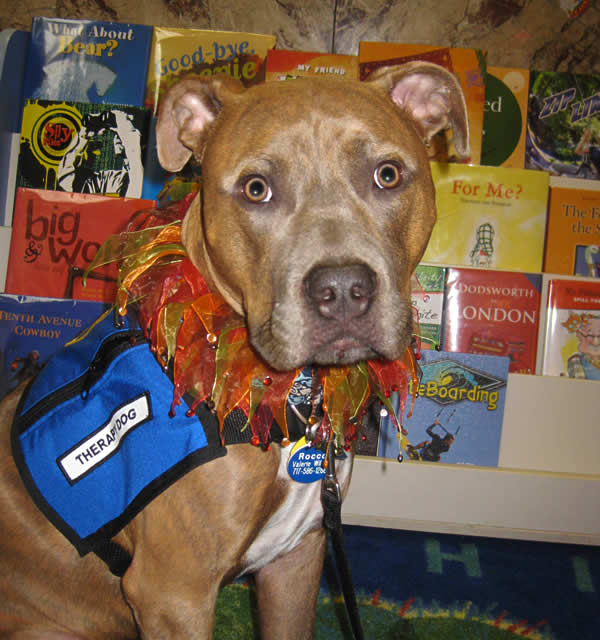
Rocco the Therapy Pit Bull at PAWS to Read in Baltimore, MD
 

The program facilitates the reading skills of children in a non-threatening, fun, and educational environment. Research shows there are many benefits. A child’s reading fluency and comprehension can improve. When a child is not constantly corrected by an adult, it helps with confidence and self esteem.

Sometimes children are partnered with therapy dogs from Pets on Wheels, like at Enoch Pratt Free Library, Baltimore, MD. Carla Hayden, Enoch Pratt’s Chief Executive Officer is enthusiastic about the program.  She said “Children will be so encouraged to read especially when they are rewarded with these warm brown eyes and doggy grins.  It will make such a difference in their reading experience.”

The PAWS to Read program is geared for children six to twelve years of age. And those are some lucky kids and dogs!

Photo Credit: Jamie Scott Lytle – Staff photographer, North County Times

9 Homemade Dog Treat Recipes


Content courtesy of the kitchn & Dog Treat Recipes

Everyone loves getting cookies and treats but dogs may be the most appreciate recipients of all!

With ingredients like peanut butter, bacon, and carob, these dog biscuit recipes are sure to have tails wagging… And at least some of them are tasty even by human standards!

  • Bachelor Dog Treats — Spago Executive Pastry Chef Sherry Yard shares her recipe with LA Weekly.
  • Best of Breed Dog Biscuits — A vegetarian, vet-approved recipe at King Arthur Flour. (pictured above)
  • Carob Crunchers — Doggy Dessert Chef developed this recipe for wheat-sensitive pups.
  • Cinnamon Bun Bites — These treats from The Family Kitchen look so good, even we got hungry.
  • Dog Biscuits — According to one of the reviewers of this Gourmet recipe, “My Great Danes loved them, so did my husband.” Others said they were good with cheese! (pictured above)
  • Homemade Doggie Treats — Dogs will love the bacon fat in this recipe from The Kitchn. (pictured above)
  • Homemade Flax Seed Dog Biscuits — A great recipe accompanied by priceless photos from White on Rice Couple.
  • Nutty Bacon Dog Treats — Dog Hill Kitchen’s recipe includes bacon and maple syrup.
  • Peanut Butter and Banana Dog Treats — This gluten-free recipe from Whole Foods includes parsley for breath freshening. (pictured above)

Non-baked Treats

Don’t worry if you don’t bake (I don’t bake either!) because there are so many healthy dog treats that don’t have to be in the form of biscuits, cookies and bones. Here’s some dog treat recipe ideas that don’t require preheating your oven:

  • Yogurt & Cottage Cheese — Does your pooch love ice cream as much as mine does? Too bad it’s not very good for them. Give him or her some yogurt or cottage cheese instead! It’s a great alternative that will make your dog just as happy as cleaning his ice cream bowl.
  • Pumpkin — Next time you open a can of pure pumpkin, give your pup some. A word of caution, though, your dog will be begging for more! Pumpkin is fantastic for dogs and loaded with fiber and vitamins. Just make sure to use pure pumpkin and not pie filling that’s loaded with a lot of fat, sugar and spices.
  • Egg Whites — Keep some hardboiled eggs on hand and give your dog just the egg white as a treat from time to time. They’re high in protein and tasty. Make sure that’s it’s just the white, though, because those yolks have a ton of fat and calories.
  • Rice & Pasta — If you keep it plain, these 2 are great alternatives to high-calorie dog treats. Most dogs would love to have a little rice or pasta mixed up with their food. If your dog’s on a weight control diet, putting some rice into the mix is a great way to add bulk without adding fat and calories.
  • Popcorn — Provided your dog isn’t allergic to corn, unsalted, plain popcorn makes great treats for dogs. And no baking! You just need a microwave.
  • Veggies — Get your dog to eat his veggies! Carrot sticks and green beans make wonderful dog biscuit alternatives. All of the crunch, but none of the fat.

So the next time you’re thinking about grabbing for that box of dog biscuits, consider giving your dog something a bit healthier to snack on. Just last night Rosco & I snacked on some tasty edamame — he so patiently waited for me to pop the soy bean from the pods and then hand it to him.* 🙂

We humans have an ongoing battle going with their weight. Always keep in mind that obesity is a huge problem for dogs, too, so making a few easy healthy dog treat recipes from time to time will keep you doggies both happy and healthy.

______________________________________________________________

*Always remember: Beans may make your dog gassy so be don’t over-indulged with the soy beans. However, the pods are OK for them so alternate the beans and the pods. They just love getting the treats.

Photo Credit: Romula Yanes/Gourmet; Whole Foods; King Arthur Flour; Regina Yunghans, Mr. Wok

Dogs and Sunglasses


Content courtesy of Dogs Wearing Sunglasses

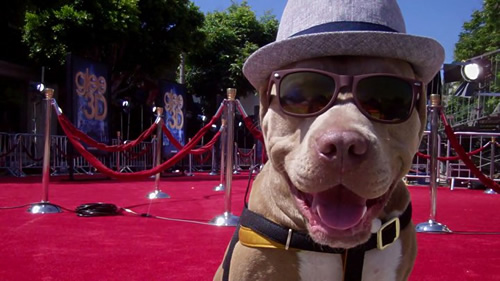
Sunglasses for dogs? No way! But then I met Sonny Ray, the sunglasses-wearing pit bull, and he really looks very cool with it.

It may seem like a wacky idea, but sunglasses and other types of eyewear for dogs have many uses besides the obvious style benefits. Are sunglasses for dogs just what the doctor ordered? Sonny Ray‘s vet thinks so because his eyes are so light.

But seriously: Is your dog walking into things all the time by accident or having a hard time finding his toy collection? Does your dog grimace or paw at his face when faced with the sun’s bright yellow rays? Maybe you just have a style-conscious dog who likes to stay on top of what’s cool in the fashion world. If you answered yes to any of those questions, then there is probably a pair of specs out there that will solve their problem!

Corrective Eyewear
But sometimes you need them because your dog is losing his/her eyesight. Just like humans, dog’s eyesight can fade and dogs with fading eyesight or severe vision problems tend to be easily frightened and may be more likely to bite when they get startled. Handling a dog’s disability can be challenging and heartbreaking, but a pair of prescription glasses can help immensely. Many owners of dogs with difficulty seeing swear by them.

If you are in need of prescription glasses for your dog, a veterinary ophthalmologist can examine your dog and determine the best course of action to solve your dog’s vision problems and even write you a prescription tailored to your dogs needs. This prescription is then sent to a company like Doggles and often at a cost of fewer than $100.

Prescription glasses for dogs are helping dogs see better everyday. If your dog has a vision problem due to cataracts or even just because of a natural decline in eyesight because of aging, it would be a good idea to look into prescription glasses so that your dog can lead a happy and healthy life.

Sunglasses
Some dogs’ eyes are really sensitive to sunlight, and all dogs need protection from harmful Ultraviolet rays. A pair of doggie sunglasses are a great way to block out UV light and will make sunlight easier on the eyes of dogs who are sensitive to it.

The frames and lenses of sunglasses for dogs are available in many different colors and styles, so you can find the perfect pair to match your dog’s look and personality. Dog shades are also fun for all the doggies who like to dress up and look cool.

Protective Eye Wear
Eyewear for dogs can also be used to protect the eyes of dogs who like to ride in cars with their heads out the window, on motorcycles, or in truck beds. These fun-loving passengers can get pieces of dust and other foreign objects in their eyes when unshielded. But with a cool pair of glasses or sunglasses, not only would Fido look awesome with his head out the window of your car just enjoying the breeze in his fancy new goggles, he would also be much safer as well. Protective Doggles are also used to protect the eyes of police dogs, search and rescue dogs, and other services dogs while on the job.

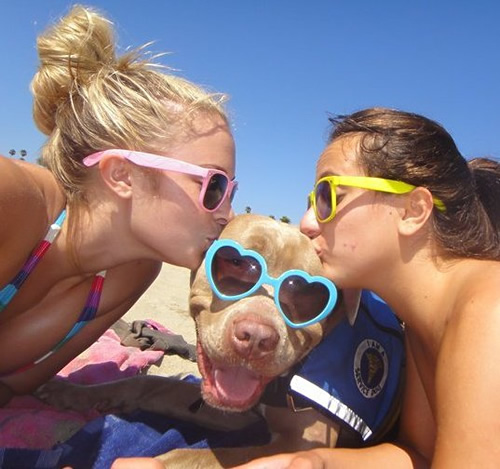
And, who can blame your dog to want to look as cool as Sonny Ray? And the girls love him!

BTW, Sonny wear human sunglasses because his massive head just managed to hold on to them. He’s gone running and even hiking with them with no problem!

Photo Courtesy of Joshua Reyes, Sonny Ray’s dad

Top